
What Shims Do — and Why We Use So Many of Them
If you’ve ever walked by one of our job sites, you’ve probably seen tiny wooden wedges tucked under cabinets, stacked behind trim, or sitting near a level. Those are shims—and they’re the unsung heroes of almost every remodeling project we do.
At HUGE Handyman, we don’t just use them… we rely on them. Because homes aren’t perfect. Walls bow. Floors slope. Corners are rarely square. Shims help us bridge the gap between rough framing and finished perfection.
What Is a Shim?
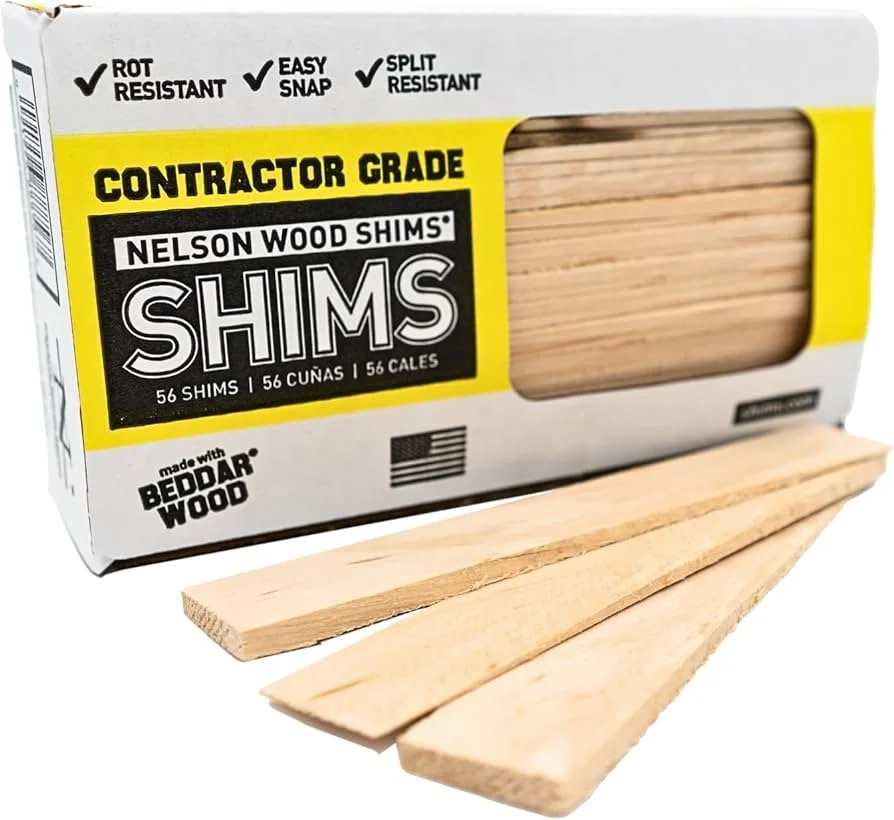
A shim is a thin, tapered piece of wood, plastic, or composite used to align, level, or space out construction materials during installation. They usually come in packs, and we often shave or cut them on the fly to fit exactly where we need them.
There are different types:
Wood shims – great for framing, trim, and cabinet installs
Plastic shims – water-resistant, often used in exterior or wet areas
Metal shims – used in heavy-duty or precise applications
Where We Use Shims on Remodels
We use them everywhere — and we mean it. Just a few examples:
Behind Cabinets
Walls are never perfectly flat. Shims allow us to mount cabinets that are level and aligned, even when the wall behind them isn't.
Around Doors
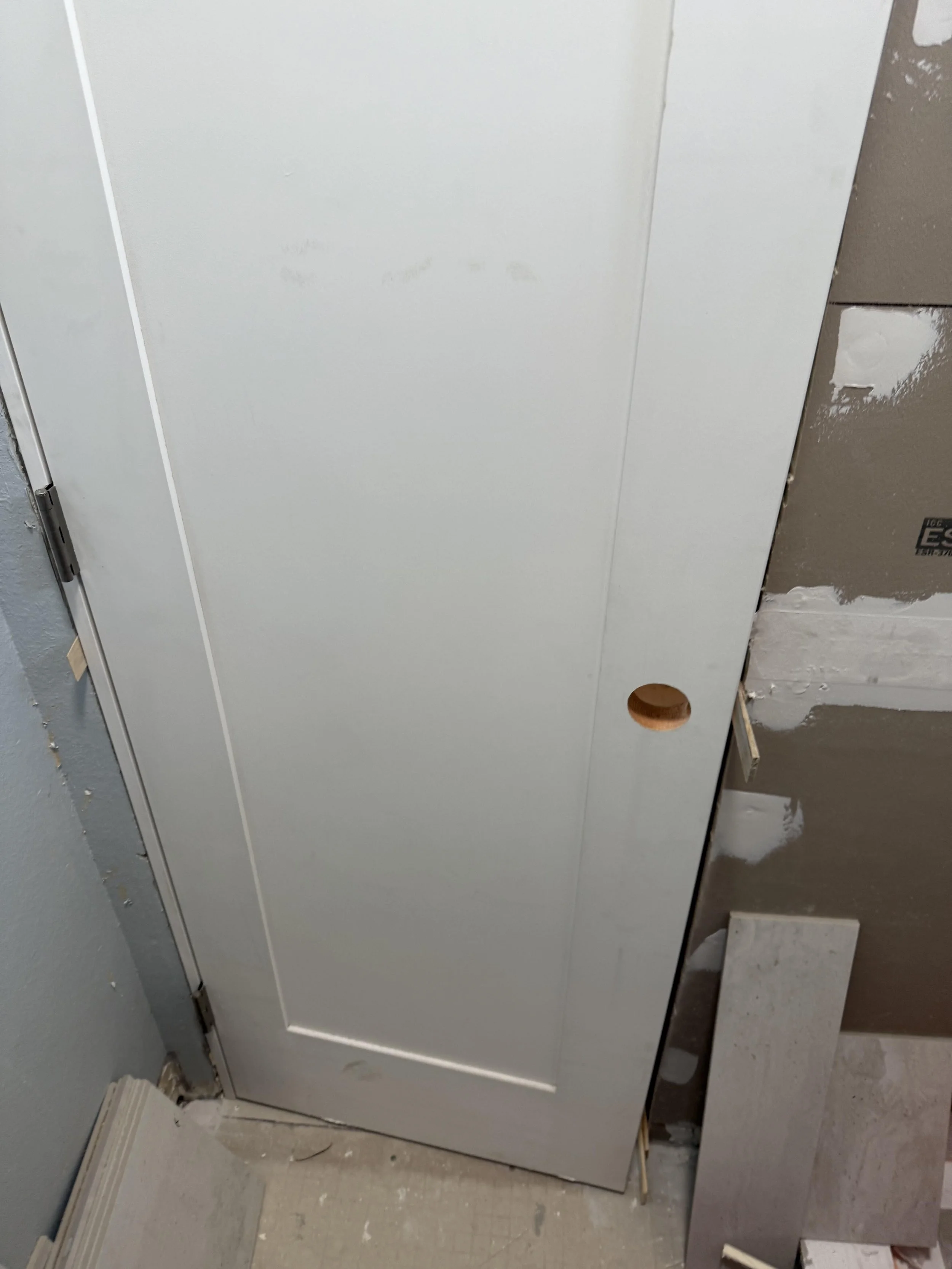
Hinge binding? Uneven reveals? Doors not latching? We fix that by shimming the jambs to square things up before we fasten.
Window Installations
Windows have to be perfectly plumb to open, close, and seal properly. Shims help us center and stabilize them before screwing into framing.
Under Flooring Transitions
Sometimes one room sits a little higher than another. We use shims to smooth those differences, especially under threshold trim or floating floors.
Behind Trim and Baseboards
Old walls might bow out, leaving gaps under baseboards. Shimming behind the trim helps us get a tight finish with no caulking overload.
Why It Matters
Think of shims like the precision tools they are:
They absorb imperfections in framing and finishes
They prevent long-term issues like loose cabinets, cracked grout, or swinging doors
They let us create level, flush, square results where the framing didn’t give us that luxury
Without shims, your “perfect” install might start to show flaws as things settle or shift.
The HUGE Handyman Way
We stock every tool we need, and shims are always in the bag. They may be small, but they’re how we deliver straight lines, quiet doors, smooth floors, and professional-level finishes—even when the framing tries to fight us.