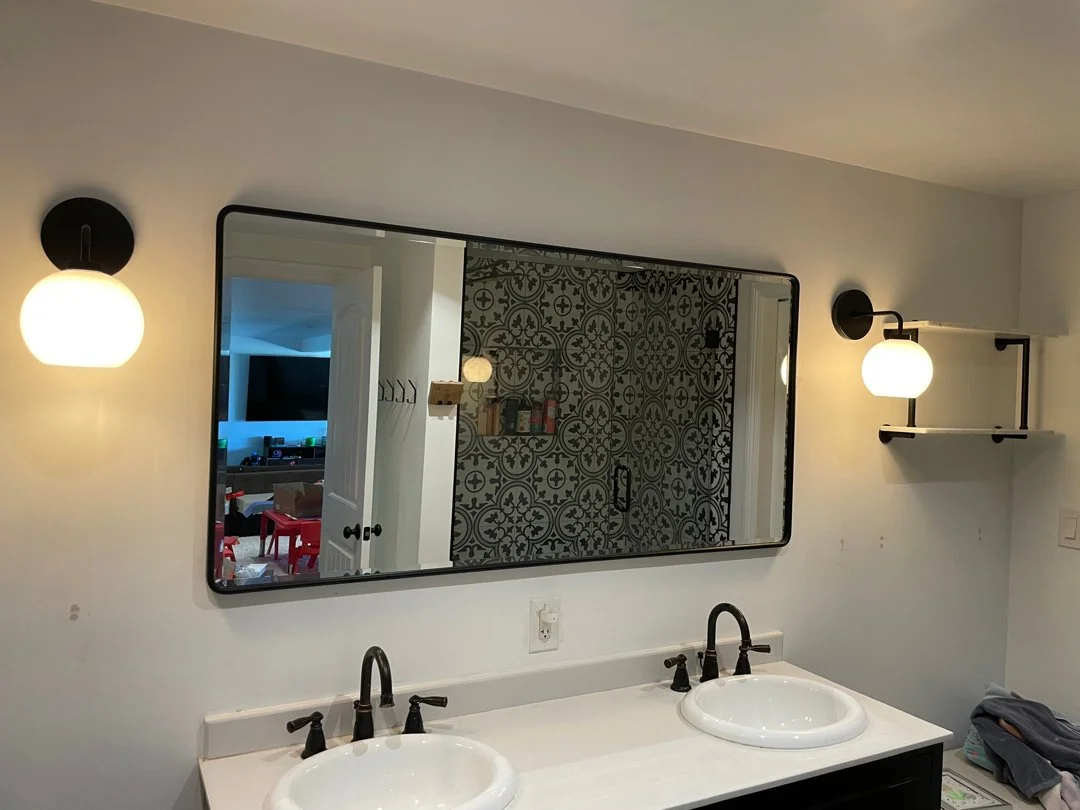
Why Stud Location Is Everything
When we walk into a room, one of the first things we do—before we mark anything, drill, or level—is find the studs. Why? Because anchoring into a stud is the difference between a secure install and a costly failure.
At HUGE Handyman, we know that finding solid backing is the backbone of quality work.
🧱 What Needs to Hit a Stud?
TV mounts – Even with anchors, TVs need at least 2 lag bolts in solid wood
Upper cabinets – These carry serious weight when loaded
Floating shelves – Especially when made of heavy materials
Large mirrors or artwork – They may seem light now, but fall risk increases over time
Towel bars & grab bars – Especially in bathrooms, these need to hold up under tension
We never rely on drywall alone when safety or durability is on the line.
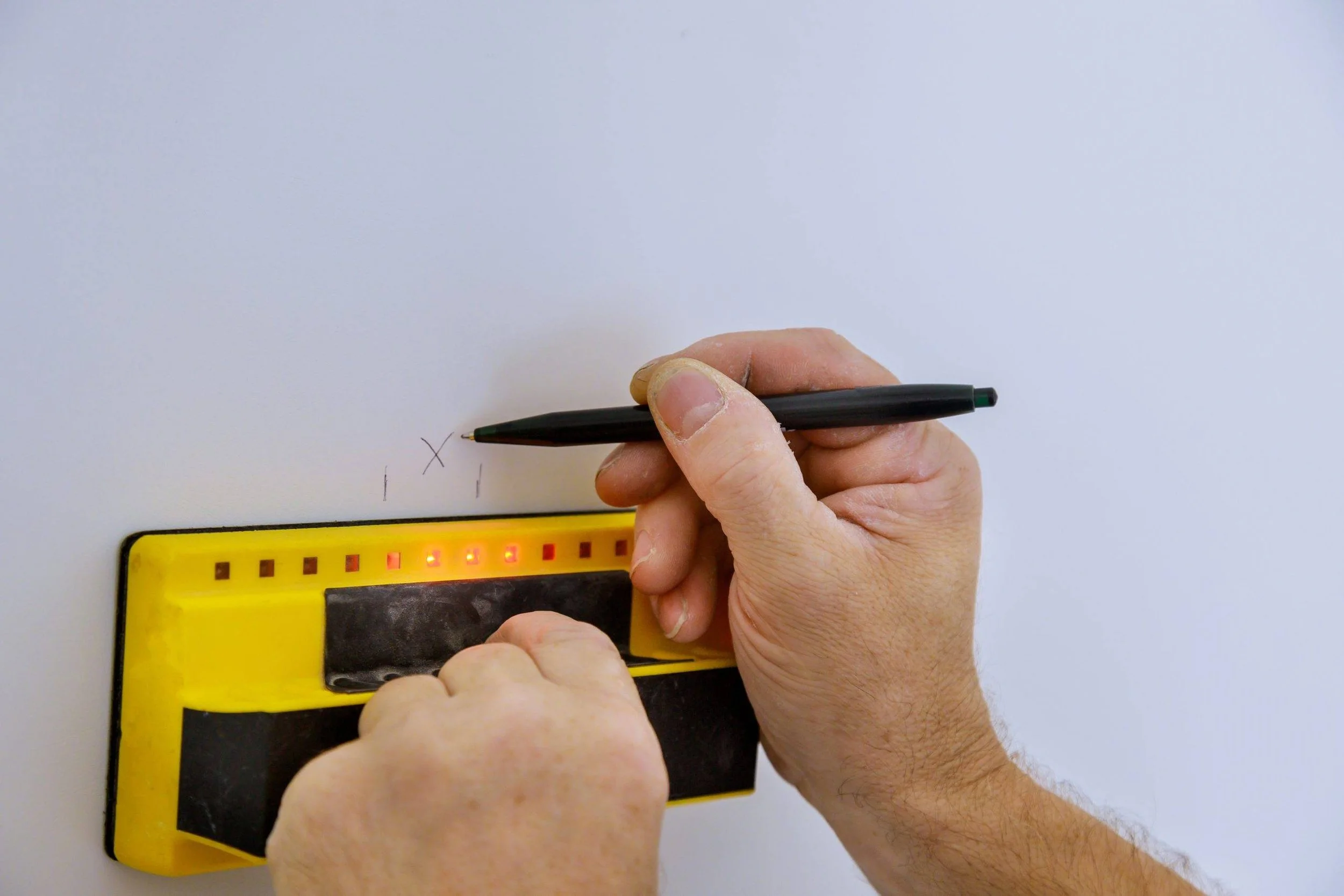
🔍 How We Find Them (Accurately)
Yes, we use stud finders—but that’s just the beginning.
We double-check:
Electrical outlet spacing (usually on a stud)
Measuring 16" or 24" centers from known studs
Tapping and confirming resistance
Checking behind drywall when necessary
We don’t drill until we’re 100% sure.
Why “Close Enough” Isn’t Good Enough
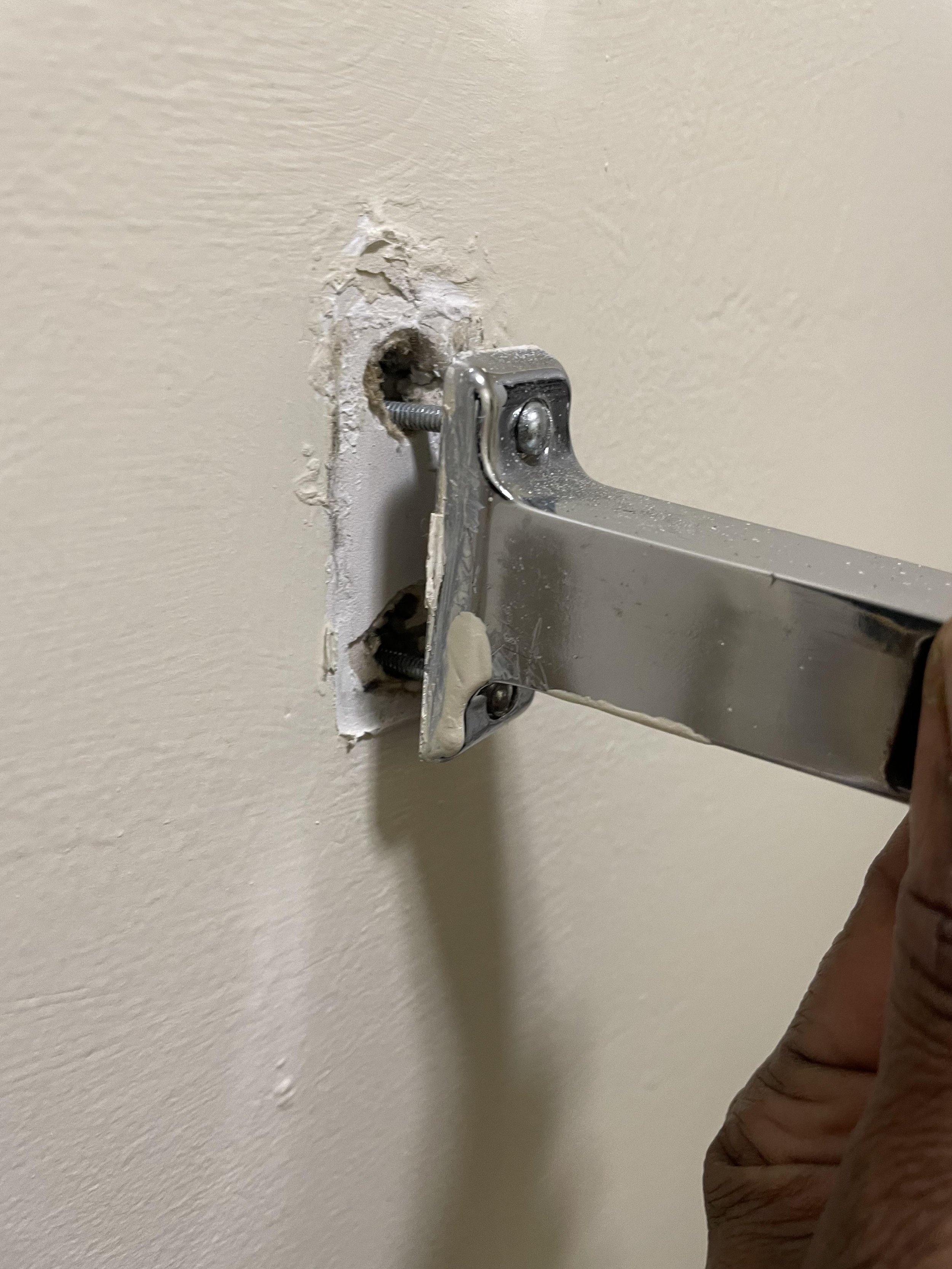
If you miss a stud or fasten to just drywall:
The object can pull out over time
Weight load may cause bowing or damage
In bathrooms, moisture makes this even worse
You risk damaging wires or pipes behind the wall
We take our time and do it right, even if that means adjusting layouts.
✅ Final Thought: What’s Behind the Wall Matters
We’ve seen too many “professional installs” fail because someone didn’t take 5 extra minutes to find the stud. At HUGE Handyman, every screw has a reason—and every anchor is tested before we walk away.